 Listicle
7 Best Practice Routes for Orange County Beginners
Last Updated: November 19, 2026
Quick Summary
The best practice routes for Orange County beginners start with empty parking lots, then move to quiet residential streets, long main-road blocks with turn lanes, commercial corridors, DMV test-area roads, freeway on-ramps, and finally mixed main-road driving. Most learners should master the first two practice routes before moving on to harder traffic.
- Start in empty parking lots to build steering, braking, and parking control.
- Move to quiet residential streets once stopping and steering feel natural.
- Practice on long blocks with marked turn lanes outside rush hour.
- Leave freeway practice until city driving feels comfortable.
- Driver Ed online costs $30.00; 6 hours of training starts at $440.00.
Table of Contents
- Why Route Choice Matters When You Start Driving in Orange County
- Quick Comparison: The 7 Practice Routes by Difficulty
- 1. Empty Parking Lots: Your First Practice Space
- 2. Quiet Residential Streets in Anaheim and Fullerton
- 3. Long Blocks on Main Roads with Marked Turn Lanes
- 4. Commercial Corridors on Lake Forest Drive
- 5. Driving Test Practice Routes Near DMV Locations
- 6. Introductory Freeway On-Ramps and Merging Practice
- 7. Mixed Practice on Main Roads
- Affordable Driving Lessons in Orange County
- Frequently Asked Questions
Why Route Choice Matters When You Start Driving in Orange County
Choosing where you practice is one of the most important decisions a new driver makes. City Freeway Driving School works with teens and adults across Orange County, and the practice routes you pick in those first weeks shape how confident you feel behind the wheel. Start too hard and fear takes over. Start too easy and you may struggle the first time you face a busy intersection.
The seven practice routes below move from low-stress spaces to real traffic. Each one builds on the last, so you can progress at your own pace. Our affordable lesson options make it easier to practice with a certified instructor alongside these routes, with a very flexible schedule seven days a week. Compare affordable driving school options in Orange County if you want online education and DMV test preparation. We provide driving lessons in Irvine, Orange, Santa Ana, Tustin, Costa Mesa, Anaheim, and many more cities in Orange County, CA.
Think of route choice as a ladder. The lower rungs teach basic control, such as steering, braking, and turning. The upper rungs teach you to read traffic, merge, and change lanes. Most beginners spend their first sessions near the bottom and move up once braking and steering feel automatic.
Quick Comparison: The 7 Practice Routes by Difficulty
| Route | Difficulty | Main Skills Practiced | Traffic Level |
|---|---|---|---|
| 1. Empty parking lots | Beginner | Steering, braking, parking | None |
| 2. Quiet residential streets | Beginner | Stop signs, slow turns | Very low |
| 3. Long blocks with marked turn lanes | Beginner to intermediate | Left and right turns, signals | Low to moderate |
| 4. Commercial corridors | Intermediate | Lane position, driveways, pedestrians | Moderate |
| 5. Near DMV test locations | Intermediate | Test-style maneuvers, traffic control | Moderate |
| 6. Freeway on-ramps and merging | Advanced | Merging, speed matching, lane changes | High |
| 7. Mixed practice on main roads | Advanced | Full traffic handling | High |
Use this table to decide where to start. Most learners should master routes 1 and 2 before moving to the rest.
1. Empty Parking Lots: Your First Practice Space
Empty parking lots are the safest place to begin, and they are the bottom rung of the ladder. Large lots on weekday mornings or early weekend hours often have few cars and no moving traffic, so you can practice starting, stopping, and steering without worrying about other drivers. Treat this as a control lab, not a driving lesson, the goal is muscle memory, not traffic awareness.
Skills to practice, in order:
- Straight-line creep: hold a steady 5 mph, then brake smoothly to a full stop without nose-diving.
- Gentle turns: make wide, slow arcs around a row of empty spaces, checking mirrors before each turn.
- Pull-in and pull-out parking: use painted spaces as guides, then back out slowly while checking both mirrors and looking over your shoulder.
- Three-point turn in an empty aisle: practice the sequence of forward, reverse, forward without touching a curb.
How to know you are ready to leave: you can stop smoothly from low speed three times in a row, steer a straight line without drifting, and park between two lines without a spotter. If any of those still feel shaky, stay one more session. A common pattern is staying in the lot too long, though, once control feels automatic, quiet streets teach what lots cannot.
Timing and location tips: mid-morning on weekdays (roughly 9 a.m. to 11 a.m.) is usually the quietest window. Avoid lots near active retail centers during lunch and after-work hours, and avoid school lots during drop-off and pick-up. Large lots attached to closed businesses on weekends are often empty, but confirm there are no posted towing or no-trespassing signs before you practice.
Watch out: parking lots teach control but not traffic awareness, so do not mistake lot confidence for road readiness. Move to quiet residential streets as soon as stopping and steering feel natural.
Our affordable prices and flexible seven-days-a-week schedule make it easy to book a first session in a calm lot.
2. Quiet Residential Streets in Anaheim and Fullerton
Residential streets in areas such as Anaheim and Fullerton are a natural next step. Traffic is light, speeds are lower, and you can practice stop signs and simple turns. Many neighborhoods have wide, straight blocks that help you practice lane position.
Pick streets with few parked cars and few children playing outside. Visit at off-peak times, usually mid-morning or early afternoon on weekdays, when school and commuter traffic has cleared. Practice checking your mirrors before every turn and before you slow down.
Residential routes also help you learn to yield to pedestrians and cyclists. Learners in Anaheim can review driving schools in Anaheim to compare lesson schedules before booking. Watch for people entering the street from driveways, which is a skill you will use on every road you drive later.
3. Long Blocks on Main Roads with Marked Turn Lanes
Main roads with long blocks and marked turn lanes are where you begin practicing real traffic flow. Long blocks mean fewer intersections, so you can focus on one thing at a time. Marked turn lanes teach you to position the car before a left or right turn.
Practice signaling early, checking your mirrors, and moving into the turn lane well before the intersection. Simple intersections with clear signals are ideal. Avoid complex multi-lane intersections until you are comfortable with the basics.
Schedule these routes outside rush hour. Traffic that moves slowly can feel more stressful than fast traffic, because you have to make quick decisions while other drivers are close.
4. Commercial Corridors on Lake Forest Drive
Commercial corridors add driveways, parked cars, pedestrians, and frequent turning traffic. Lake Forest Drive is a common example of this type of road. Local learners often use it once they can handle main roads comfortably.
Focus on lane position, since parked cars and turning vehicles can force sudden decisions. Expect cars to pull out of driveways and parking lots without warning. Keep a safe following distance and cover the brake when you approach busy entrances.
Commercial corridors are a good test of how far you have come. If you can drive them calmly, you are ready for the more demanding routes ahead.
Watch out: many new drivers focus so hard on the car ahead that they miss a car backing out of a parking space. Scan the sides of the road, not only the road in front of you.
5. Driving Test Practice Routes Near DMV Locations
Familiarity with local DMV locations, including Santa Ana, Costa Mesa, Fullerton, and Westminster, can help learners feel more comfortable before a road test. Our D.M.V test preparation lessons can help you rehearse these routes with an instructor.
Test-day logistics to confirm in advance: bring your permit, proof of insurance, and a registered vehicle that passes a basic safety check (working lights, signals, horn, and brakes). Arrive early, and know that appointments can fill quickly, booking ahead matters.
If you plan to book a test, our driving test service is available for $230.00, and our office can confirm current appointment availability. Our affordable pricing and flexible seven-days-a-week schedule let you fit test-prep lessons around school and work in Irvine, Orange, Santa Ana, Tustin, Costa Mesa, Anaheim, and many more cities in Orange County, CA.
Watch out: practicing only the test route can backfire if you memorize turns instead of skills, examiners watch how you drive, not whether you remember the route.
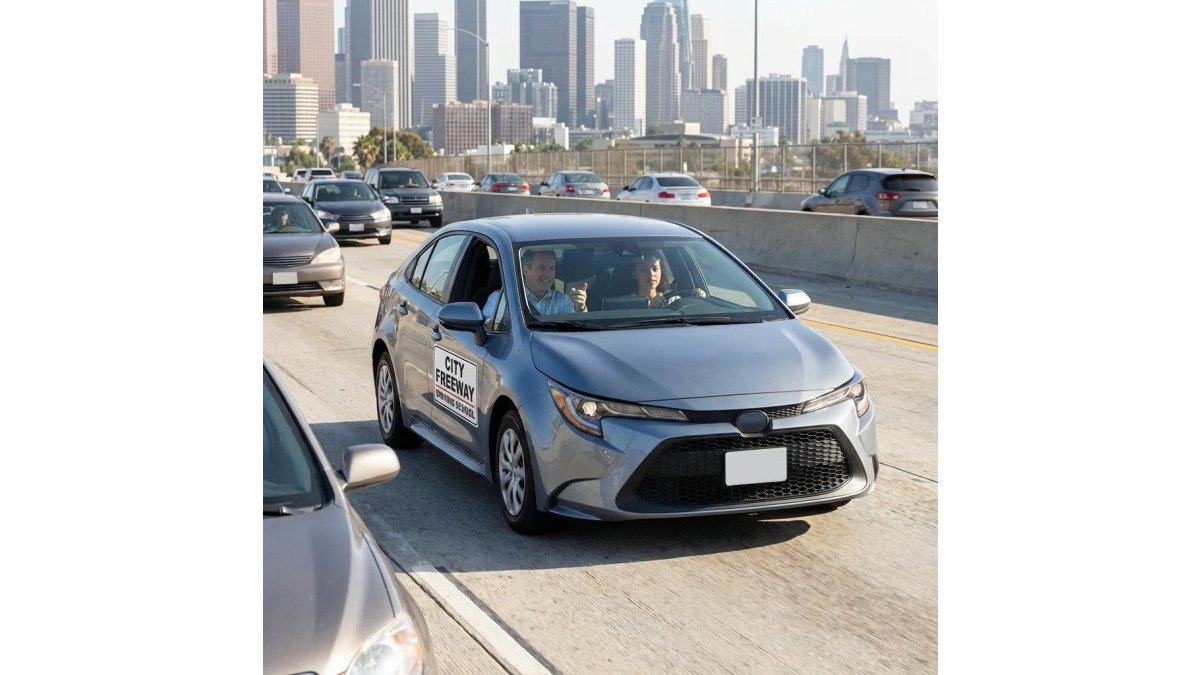
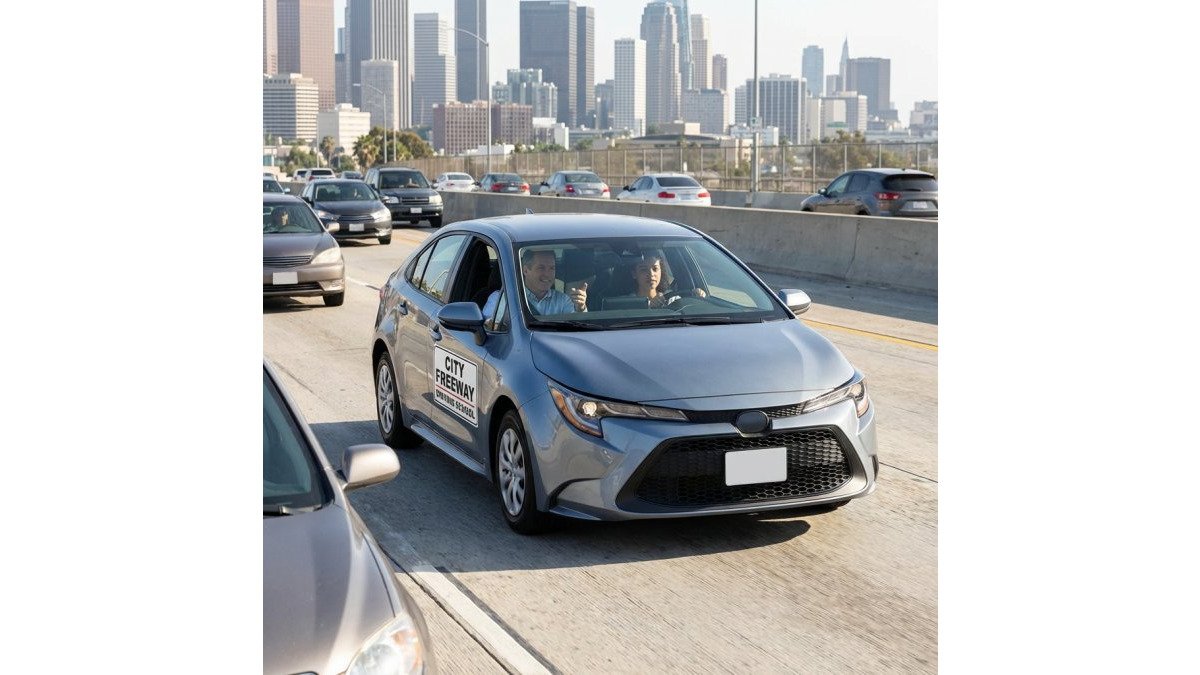
6. Introductory Freeway On-Ramps and Merging Practice
Freeway practice should wait until you are comfortable with city driving. Start with short, introductory on-ramps during light traffic. The goal is to build speed matching and merging skills without the pressure of heavy freeway flow.
Accelerate firmly on the ramp, aim to match the speed of the traffic flow, and check your mirror and blind spot before merging. For a full walkthrough, read how to practice freeway driving with confidence. Keep your merge smooth and avoid sudden braking. Once you are on the freeway, practice holding your lane and keeping a safe distance.
Our driving lessons in the freeway can help new and returning drivers build freeway skills.
7. Mixed Practice on Main Roads
The final route combines everything you have learned. Mixed practice on main roads includes intersections, lane changes, merging, and freeway entries in a single drive. This route reflects real-world driving and shows whether you are ready for independent driving.
Plan a route that includes at least one turn lane, one signalized intersection, and one freeway merge. Drive at a time of day that matches your comfort level. Afterward, review what felt difficult and repeat those routes until they feel routine.
Affordable Driving Lessons in Orange County
We keep our prices affordable so that more learners can practice with a certified instructor. Driver Ed online costs $30.00. Drivers Training of 6 hours starts at $440.00. The package that includes Driver Ed online and 6 hours of behind-the-wheel training costs $450.00.
Our very flexible schedule runs seven days a week, so you can fit lessons around school, sports, and work. Many learners can book appointments within the same week they enroll.
Driving Lessons in Orange County for Teens and Adults. We are City Freeway Driving School in Tustin, serving most cities in Orange County, CA. We offer Driver Ed online for $30.00, Drivers Training 6 hours from $440.00, and the package of Driver Ed online and 6 hours of behind-the-wheel training from $450.00. Driving Test Service $230.00. Usually we have appointments available the same week you enroll in our courses. For any questions about our services, call our office at 714-734-9030 or visit https://cityfreewaydrivingschool.com/

Choosing the right practice routes is the first step toward confident driving. City Freeway Driving School helps teens and adults build those skills across Orange County with affordable lessons and flexible scheduling. Call 714-734-9030 or visit https://cityfreewaydrivingschool.com/ to start practicing on the route that fits where you are today.
Frequently Asked Questions
Where can beginners practice driving in Orange County?
Beginners can start in empty parking lots, then move to quiet residential streets and long main roads with marked turn lanes. Practicing outside rush hour keeps traffic light and lets new drivers focus on steering, braking and turning. Many learners in Orange County progress through several of these settings over a few weeks before attempting busier roads or freeway on-ramps. A driving instructor can match each location to your current skill level and your upcoming goals.
What are the best routes for a new driver to practice?
The best routes for new drivers have wide lanes, long blocks, simple intersections and low traffic volume. Start with parking lots and residential streets, then progress to main roads with clearly marked turn lanes. Once turning and lane changes feel automatic, add commercial corridors and introductory freeway on-ramps. Choosing routes by skill level rather than by distance keeps practice productive and reduces stress for beginners.
How can a new driver practice freeway driving safely?
Freeway practice works best after you are comfortable with turns, stops and lane changes on surface streets. Begin with short on-ramp practice during light traffic, focusing on accelerating to match the flow of cars before merging. Keep a generous following distance, use your mirrors and signal early. A driving instructor can ride along for the first freeway sessions so you can build confidence with professional guidance.
How should a beginner progress from quiet streets to busier roads?
Progress in stages: empty parking lots first, then quiet residential streets, then main roads, then commercial corridors and freeway on-ramps. Move to the next stage only when you can handle the current one without frequent errors. Practice at consistent times so you learn how traffic patterns change. Many learners spend a few weeks at each stage before advancing, and they often find that clear goals for each route make the progression feel manageable.