 Listicle
7 Steps to Get Your California Permit
Last Updated: November 17, 2026
Quick Summary
To get your California permit, first confirm your age and eligibility, then complete driver education if required and gather your identity, residency and Social Security documents. Next, complete and pay for the application, schedule your DMV appointment, and pass the knowledge and vision tests. Finally, learn your permit restrictions before you start practicing.
- Under-18 applicants must be at least 15½ and under 18 to qualify for the teen permit path.
- Bring original documents, not photocopies, since a missing document is a common reason applicants leave without a permit.
- Bring at least one primary identity document and two residency documents from different sources.
- Schedule your knowledge and vision tests early, since appointment availability at local offices can be limited.
- Wear glasses or contacts to the DMV, because a failed vision test can delay your permit even when the knowledge test is passed.
Table of Contents
- Step 1: Confirm You Meet California Permit Eligibility
- Step 2: Complete Driver Education and Gather Your Certificates
- Step 3: Assemble the Identity, Residency and Social Security Documents
- Step 4: Complete the Application and Pay the Fee
- Step 5: Schedule Your DMV Permit Test Appointment
- Step 6: Pass the Knowledge and Vision Tests
- Step 7: Understand Your Permit Rules, Including Driving Permit Rules Over 18
- Start Your Permit Process With City Freeway Driving School
- Frequently Asked Questions
Step 1: Confirm You Meet California Permit Eligibility
Getting your California permit starts with knowing whether you qualify. The rules differ for teens and adults, so check your age first. Under-18 applicants must be at least 15½ and under 18, according to the California DMV instruction permit eligibility requirements. Applicants 18 and older follow a separate path with fewer requirements.
Eligibility also depends on documents and residency, which you will gather later in this process. Confirm your age category now so you know which steps apply to you.
Step 2: Complete Driver Education and Gather Your Certificates
Teen applicants generally need proof of driver education before the permit process moves forward. Check the current DMV requirements for your situation, then collect your certificates of completion or enrollment before you visit the office. Keep the originals with your other documents.
Many students choose between an online course and behind-the-wheel training. Our guide on permit course versus behind-the-wheel training explains what each option teaches and how to plan practice time before your test. You can also review the California DMV knowledge test requirements so you know what the exam covers. If you want a structured start, Drivers Ed Online for Teens from City Freeway Driving School is one way to complete the classroom portion before you visit the DMV.
Step 3: Assemble the Identity, Residency and Social Security Documents
The DMV asks for proof of identity, proof of California residency and your Social Security number. Gather originals, not photocopies, and bring more than the minimum. A missing document is a common reason applicants leave without a permit.
Acceptable documents usually include a birth certificate, a valid passport, a Social Security card and utility bills or lease agreements showing your address. Confirm the current list on the DMV website before your visit, because accepted document types can change.
Most applicants find it helpful to sort their paperwork into three folders before the visit: one for identity, one for residency and one for the Social Security number. That way, if a clerk asks for a second form of proof, you are not digging through a single stack of papers at the counter.
Identity documents (bring at least one, ideally two):
- Certified U.S. birth certificate (the original or a certified copy, not a photocopy)
- U.S. passport or passport card
- Certificate of Naturalization or Certificate of U.S. Citizenship
- Permanent Resident Card
- For applicants without these, the DMV publishes a longer list of alternative identity documents, including certain foreign passports with supporting records
California residency documents (bring at least two):
- Utility bill or cell phone bill showing your name and address
- Rental or lease agreement
- Mortgage statement or property tax bill
- Bank or credit card statement
- Insurance documents
- School documents, such as a transcript or tuition bill, for students
Social Security number:
- Your Social Security card, a W-2, or a pay stub showing the number
- If you are not eligible for a Social Security number, the DMV has a separate process; ask at the office before your appointment
A practical pattern many applicants follow is to bring one primary identity document, two residency documents from different sources, and two forms of Social Security proof. That gives the clerk options if one document is rejected for a formatting reason, such as a printed statement instead of a mailed original.
Watch out: a document that looks official can still be rejected if it is a photocopy, a screenshot, or a printout of an online statement. The DMV generally wants originals or mailed documents, so request paper copies early rather than the day before your appointment.
If you are also planning behind-the-wheel training, keep your documents together with your driver education certificate so you do not have to reassemble the packet for a later appointment. Our team at City Freeway Driving School works with teens and adults across Orange County, California, and we can point you toward the right paperwork sequence before you visit the DMV. Our very flexible schedule runs seven days a week, and appointments are usually available the same week you enroll.
Step 4: Complete the Application and Pay the Fee
Start the application online if the DMV offers that option for your situation, or complete it at the office. Fill in every field accurately, since mismatched names or addresses slow down processing. Pay the application fee using a method the DMV accepts. Check the current fee amount and payment options with the DMV before you go. Our adult permit process guide walks through each form for applicants 18 and older.
Step 5: Schedule Your DMV Permit Test Appointment
Book your knowledge and vision test appointment early. Appointment availability at local offices can be limited, especially during busy periods. Bring your confirmation details and all required documents on test day.
Parents or guardians often help teens prepare for this step. Reviewing the appointment together, along with the paperwork, reduces last-minute stress.
Step 6: Pass the Knowledge and Vision Tests
The knowledge test covers traffic laws, road signs and safe driving practices. Preparation makes a real difference, so use the official DMV knowledge test preparation resources and a practice test to review weak areas. Many applicants find that timed practice exams help them stay calm on test day.
The vision test is quick but required. Wear glasses or contacts if you normally use them. If you do not pass the knowledge test, you can usually retake it after a waiting period. Review your mistakes before the next attempt rather than retaking the same test cold.
What the knowledge test actually looks like:
- The test is taken on a DMV computer terminal at the office, and the results are printed before you leave.
- Questions are drawn from the California Driver Handbook, so the handbook is the single best study source.
- The test is available in multiple languages, and translated versions can be requested when you schedule or check in.
- Applicants with disabilities can request accommodations, such as extra time or a reader, through the DMV; arrange this before test day rather than at the counter.
If you fail the knowledge test:
- Check the DMV website for the current rules on retaking the knowledge test.
- Ask the clerk what applies to your situation before you leave the office.
- Studying the official handbook and taking practice tests is a reliable way to prepare for the knowledge test.
- Review the printed result sheet, which usually shows the topic areas you missed, and focus your next study session on those areas rather than rereading the whole handbook.
If you fail the vision test:
- The DMV may ask you to visit an eye care professional and bring back a completed vision form.
- Bring your glasses or contacts to every DMV visit, even if you only wear them occasionally, because the vision screening is part of the permit process.
A common pattern is for applicants to schedule the knowledge test and the vision screening in the same appointment, which saves a second trip. When you book, confirm that both are included so you are not sent home to reschedule.
Watch out: showing up without your glasses or contacts can turn a passing vision score into a failed one, and a failed vision test can delay the permit even when the knowledge test is passed.
If you want to reduce test-day stress, pair your DMV preparation with behind-the-wheel practice. City Freeway Driving School offers Driver Ed online for $30.00, Drivers Training 6 hours from $440.00, and the package of Driver Ed online with 6 hours of behind-the-wheel training from $450.00. The Driving Test Service is $230.00. These are some of the most affordable prices in the area, and our very flexible schedule runs seven days a week across Irvine, Orange, Santa Ana, Tustin, Costa Mesa, Anaheim and many more cities in Orange County, CA. Appointments are usually available the same week you enroll. Call 714-734-9030 or visit https://cityfreewaydrivingschool.com/ with any questions.
Step 7: Understand Your Permit Rules, Including Driving Permit Rules Over 18
Your permit comes with restrictions. Teen permit holders generally must drive with a licensed adult supervising them, and practice hours are tracked before a license is issued. Adults with permits face different rules, so review the California permit-to-license guide to understand your timeline.
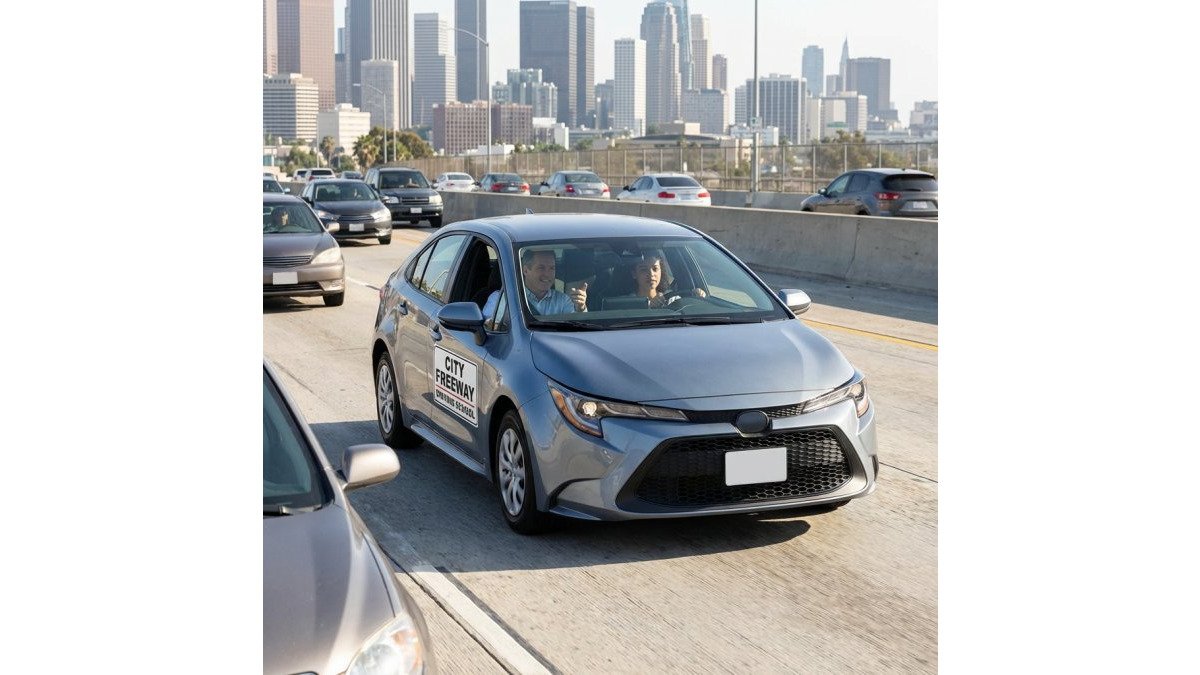
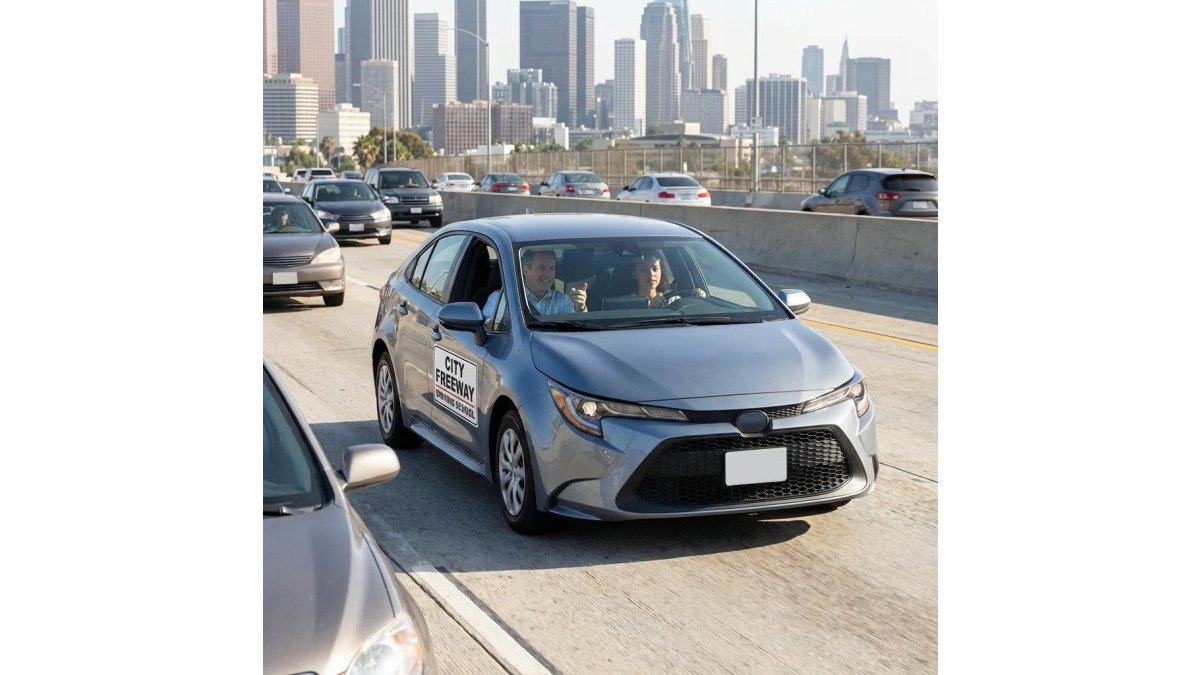
Permit rules for drivers over 18 also differ from those for teens. Our California permit rules guide explains age limits, supervision requirements and restrictions for both groups. Knowing these rules now helps you avoid violations while you practice. If you need hands-on practice on busier roads, driving lessons in the freeway can help you build confidence before you drive on your own.
Start Your Permit Process With City Freeway Driving School
Getting your California permit is manageable when you follow these seven steps in order. City Freeway Driving School provides DMV-compliant driver education and behind-the-wheel training for teens and adults across Orange County, California, including Irvine, Orange, Santa Ana, Tustin, Costa Mesa and Anaheim. Our very flexible schedule runs seven days a week, with appointments often available the same week you enroll.
Driver Ed online is $30.00, Drivers Training 6 hours is $440.00, and the package of Driver Ed online with 6 hours of behind-the-wheel training is $450.00. The Driving Test Service is $230.00. These are some of the most affordable prices in the area.
Driving Lessons in Orange County for Teens and Adults. We are City Freeway Driving School in Tustin, serving most cities in Orange County, CA. We offer Driver Ed online for $30.00, Drivers Training 6 hours from $440.00 and the package of Driver Ed online and 6 hours of behind the wheel training from $450.00. Driving Test Service $230.00. Usually we have appointments available, the same week you enroll in our courses. Any questions about our services, please call our office number 714-734-9030 or visit our website https://cityfreewaydrivingschool.com/
Frequently Asked Questions
What are the steps of getting a permit in California?
The process generally follows seven steps: confirm eligibility, complete any required driver education, gather identity, residency and Social Security documents, complete the application and pay the non-refundable fee, schedule a DMV appointment, and pass the knowledge and vision tests. Applicants under 18 generally must complete a driver education course before a permit is issued. Check the California DMV website for current fee amounts and document lists before your visit.
What do I need to bring to the DMV for a permit test over 18?
Applicants 18 and older should bring acceptable proof of identity, proof of California residency, and proof of a Social Security number, along with a completed application. Because document rules can change, confirm the current list in the California Driver Handbook or on the DMV website before you go, and bring originals rather than photocopies where the DMV requires them.
Can you walk in for a California permit test, or do you need an appointment?
Scheduling an appointment is the most reliable way to avoid long waits at a DMV office, and the DMV recommends checking its website for appointment availability. Walk-in service may be possible at some offices depending on the day and volume, but availability varies. Plan ahead, bring all required documents to your appointment, and allow extra time for check-in, the vision test and the knowledge test.
Can adults get a learner's permit in California?
Yes. Applicants age 18 and older can apply for an instruction permit, but they must still provide the required identity, residency and Social Security documents, pay the application fee, pass the vision test and pass the written knowledge test. Check the California DMV's instruction permit page for the age-specific rules that apply to you.